![Picture of Mahibur Fakir [Hillol]](https://secure.gravatar.com/avatar/5d35a11815be0a5f73b6180975d1521fdd7694c880473d8ad5c74749dce26bd6?s=96&d=mm&r=g)
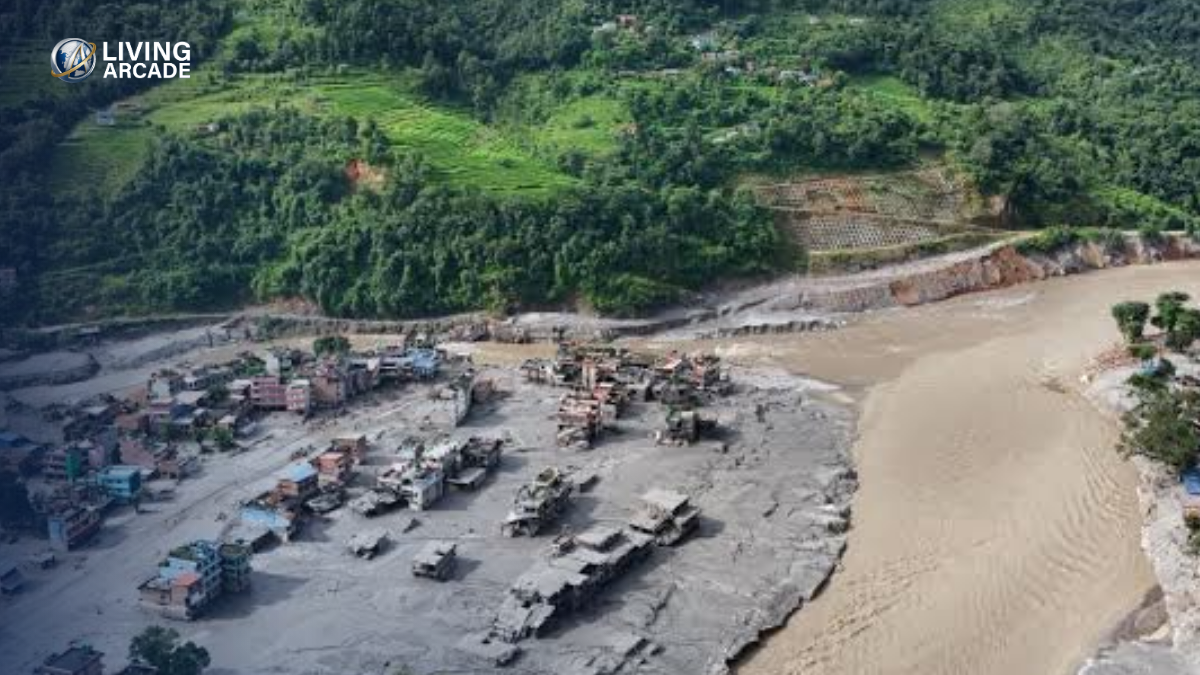
A devastating Nepal Flood Disaster has left at least 162 people dead and 826 missing after catastrophic flash floods and landslides swept through areas near Nepal’s border with Tibet, according to the latest update from the country’s disaster management authority.
The missing include members of the security forces, residents and hundreds of tourists. More than 529 tourists are among those unaccounted for, while rescue teams continue searching through mud-covered communities and damaged mountain areas.
Authorities fear the death toll could rise as many people may remain trapped beneath collapsed buildings, mud and debris.
Nepal Flood Disaster Triggered by Glacial Collapse
The disaster struck on Wednesday in the Bhotekoshi-Trishuli river region, affecting areas including Rasuwa and Nuwakot districts.
Officials initially believed an earthquake had triggered the disaster after seismic activity was detected. However, the US Geological Survey later said further analysis found that no earthquake had occurred.
Instead, the agency concluded that a glacial collapse and debris flow generated the seismic signals and caused catastrophic destruction downstream.
Nepali authorities had earlier suggested that a massive section of ice may have broken away from a mountain, pulling rocks and sediment downhill and unleashing the destructive flow.
Scientists are still investigating the exact sequence of events. They are also examining recent rainfall, possible glacial lake activity and whether river channels became blocked.
Hundreds of Tourists Remain Missing
The disaster has caused particular concern for foreign tourists and pilgrims travelling near the Nepal-Tibet border.
Many of those missing were travelling to or from Mount Kailash and Lake Manasarovar, a major pilgrimage destination for Hindus.
At least 133 Indian nationals were reported missing earlier, while tourists from several other countries have also lost contact with their families and tour operators.
Tour company Kailash Journeys said 27 trekkers and four members of its staff were missing. The group was taking part in a 15-day pilgrimage tour and was last contacted at around 08:00 Nepali time on Wednesday.
Another operator, Himalayan Glacier US, reported that a group of 47 people, including guides and travellers, had gone missing.
The group reportedly included Australians, Canadians, Americans, British nationals, Singaporeans and Nepali citizens. The company said many were preparing to cross into Tibet when communication was lost.
Earlier reports also said nationals from the United States, United Kingdom, Australia, New Zealand and other countries were among those missing.
Nepal Army Deploys 2,000 Personnel
Nepal has launched a major search and rescue operation following the Nepal Flood Disaster.
The Nepali army has deployed around 2,000 military personnel for land and aerial operations in the worst-affected areas. Police and armed police units have also joined the rescue effort.
Army spokesperson Brigadier General Rajaram Basnet said troops had rescued at least 97 people trapped by the flooding, including workers stranded inside a tunnel connected to the Trishuli A hydropower project.
Rescue operations remain difficult because of continuing rain, unstable mountain terrain and damaged roads.
Chinese authorities on the Tibet side also said narrow mountain roads and difficult weather conditions were slowing the deployment of heavy rescue equipment.
Tibet Disaster Adds to Regional Crisis
The disaster also affected Gyirong county in Tibet, near the border crossing between China and Nepal.
China’s state broadcaster CCTV reported that 558 people were missing on the Tibetan side, including 260 foreign nationals. Authorities said the confirmed death toll there remained at three in the latest update.
However, officials have warned that figures from both sides of the border may overlap because of the movement of tourists and travellers through the region.
Gyirong serves as an important border crossing for tourism and travel between Nepal and Tibet.
Chinese authorities have ordered large-scale rescue and relief efforts while warning that continued rainfall could create further danger.
Risk of More Flooding
Experts have also raised concerns about a possible secondary flooding event.
The International Centre for Integrated Mountain Development warned that debris from the initial disaster may have partially blocked sections of the Trishuli River.
If debris blocks a narrow part of the river, it could create a temporary landslide dam. A sudden collapse of such a blockage could send another powerful wave of water and debris downstream.
Scientists and authorities are now assessing the location, size and stability of possible blockages.
Several downstream areas, including parts of Chitwan, have been placed on high alert as water levels continue to rise.
International Aid and Support
International support is beginning to reach Nepal as the scale of the disaster becomes clearer.
The United States has pledged $500,000 in emergency assistance for shelter, water, sanitation and other essential relief supplies.
Nepal’s government has also dispatched around eight tonnes of emergency materials to affected communities. The supplies include blankets, mosquito nets, solar lights, solar panels and sleeping bags.
The United Nations said its teams and partners were mobilising support for Nepal’s government-led response.
China, India, the European Union and other international partners have also offered assistance or support.
For more official information on disaster preparedness and response, readers can visit the USGS official website and the United Nations official website.
As rescue teams continue searching remote mountain communities, authorities warn that the number of casualties and missing people may change as new information emerges.
Frequently Asked Questions
How many people are missing in the Nepal Flood Disaster?
Nepal’s disaster management authority said 826 people were missing in its latest update, including security personnel, tourists and members of the public.
How many people have died?
Nepali police reported at least 162 deaths in the latest update provided in the live reporting.
What caused the Nepal floods?
The US Geological Survey said additional analysis indicated a glacial collapse and debris flow caused the catastrophic downstream impacts, rather than an earthquake.
Why are so many tourists missing?
Many missing travellers were on pilgrimage routes connected to Mount Kailash and Lake Manasarovar near the Nepal-Tibet border.
Could more flooding occur?
Yes. Experts are assessing whether debris has temporarily blocked parts of the Trishuli River, which could create a dangerous secondary flooding risk.
Are rescue operations continuing?
Yes. Nepal has deployed around 2,000 army personnel, alongside police and other emergency teams, for land and aerial search and rescue operations.
![Picture of Mahibur Fakir [Hillol]](https://secure.gravatar.com/avatar/5d35a11815be0a5f73b6180975d1521fdd7694c880473d8ad5c74749dce26bd6?s=176&d=mm&r=g)