![Picture of Mahibur Fakir [Hillol]](https://secure.gravatar.com/avatar/5d35a11815be0a5f73b6180975d1521fdd7694c880473d8ad5c74749dce26bd6?s=96&d=mm&r=g)
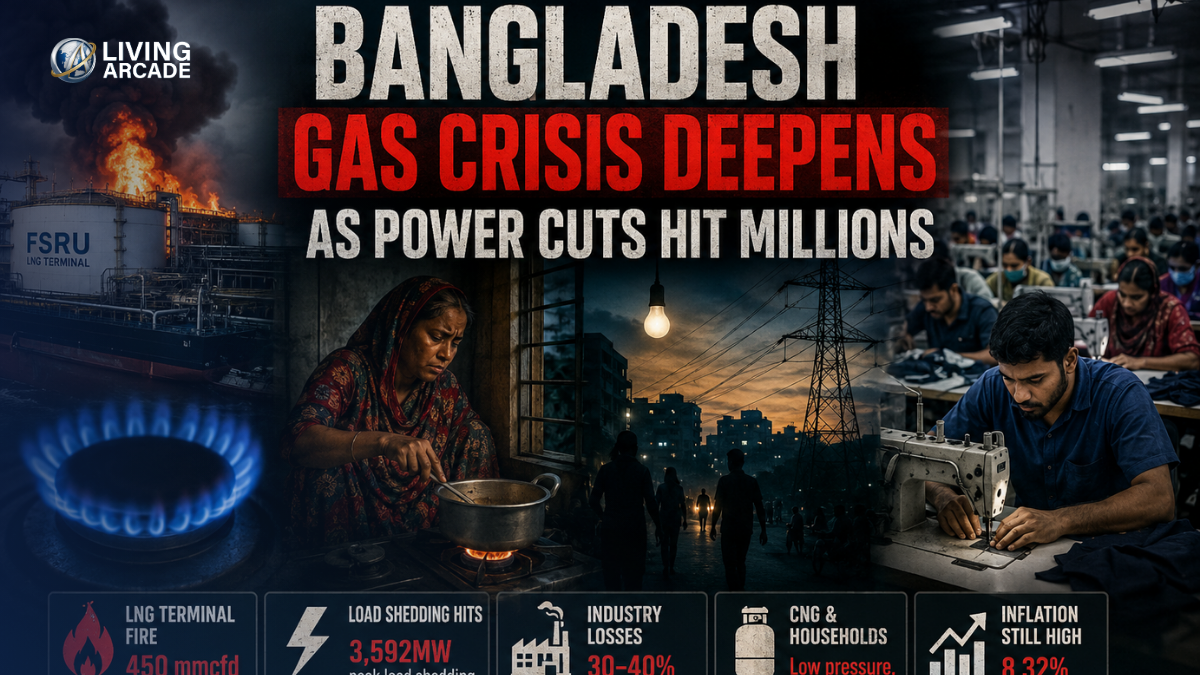
The Bangladesh gas crisis has become the country’s biggest story this August. Since a fire hit a floating LNG terminal on 21 July, homes, factories and power plants have all been running short of fuel. Load shedding crossed 3,500 megawatts on some nights. Kitchens in Dhaka struggle to light a stove. Villages sit in the dark for half the day. Here is a clear look at what happened, who is suffering, and what the government says it will do next.
What started the Bangladesh gas crisis
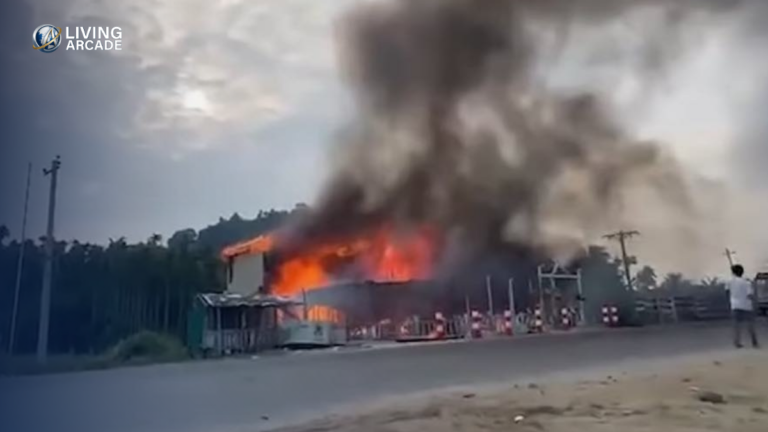
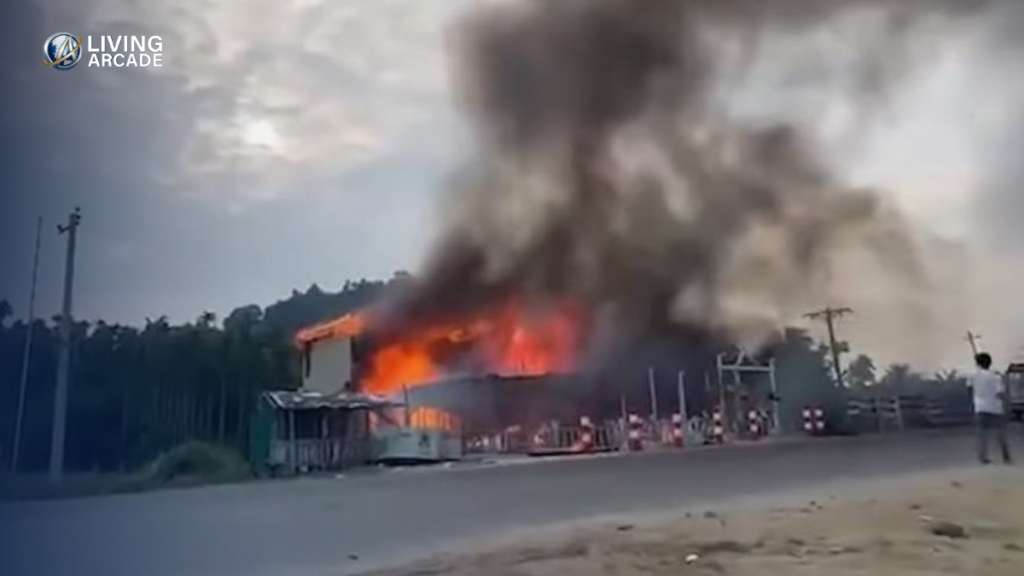
The trouble began on 21 July 2026. A fire damaged cable systems at the floating storage and regasification unit, or FSRU, operated by US company Excelerate Energy off Moheshkhali in Cox’s Bazar. About 450 million cubic feet of gas per day (mmcfd) disappeared from the national grid almost overnight.
However, the problem did not start with one accident. Domestic gas fields are ageing fast. The country loses roughly 150 mmcfd of local production every year, because repair work on old wells no longer brings back the volumes it once did. Experts also warn that local reserves may run dry by around 2031.
Imports have not covered the gap either. Asian spot LNG prices climbed to about $21.45 per million British thermal units, more than double the $10.60 recorded in late February 2026. On top of that, QatarEnergy’s facility was damaged during the US-Iran conflict, which cut expected deliveries to Bangladesh by roughly half for the next three to four years.
Power cuts turn a fuel problem into a national one
Gas-fired plants cannot run at full load without gas. So the Bangladesh gas crisis quickly became a power crisis.
On 11 August, load shedding peaked at 3,592MW at midnight. Demand stood at 17,523MW against a supply of 13,931MW. Earlier that evening, demand touched 18,043MW, the highest figure of the year so far.
Rural areas took the hardest hit. The Bangladesh Palli Bidyut Association, which represents 80 rural electricity cooperatives, said its combined demand averaged 8,000MW to 9,000MW while allocation was only 5,000MW to 6,000MW. These cooperatives serve nearly four crore customers, or about 80 percent of all electricity users in the country.
As a result, many villages faced eight, 10 or even 12 hours without power in a single day. Public anger followed quickly. The association wrote to the Inspector General of Police asking for security at its offices and substations, after several were attacked and vandalised.
Factories lose output, orders and money
Industry has felt the Bangladesh gas crisis more sharply than any other sector. BGMEA said garment production fell by 30 to 40 percent on average, and by as much as 60 percent in some units. Dyeing, washing and finishing suffered most, because these processes need high gas pressure.
In Narayanganj, at least 85 dyeing units and 65 garment factories were directly affected. Many received no gas at all, while others ran on just 2 to 4 psi.
Textile mills are struggling too. A large number of BTMA member mills are shut, and those still running produce no more than 30 percent of capacity.
Diesel is the usual backup, but it costs far more. Apex Footwear managing director Syed Nasim Manzur said his company’s diesel use jumped by about 390 percent during the long outages. Meanwhile, BGMEA has asked international buyers to accept shipment delays of one to two weeks. Industry leaders say the bigger danger is not the extra cost, but the loss of buyer confidence.
Homes and CNG stations feel it every day
For ordinary families, the Bangladesh gas crisis is a daily fight. Gas pressure in many Dhaka neighbourhoods dropped so low that cooking became difficult, and long queues returned at LPG shops.
Transport suffered as well. In Narayanganj, 30 of the district’s 33 CNG filling stations stopped operating because of very low pressure. One station engineer said his machines needed at least 15 psi to work, but he was getting less than 1 psi.
Prices and the cost of living
Inflation eased slightly in July 2026, falling to 8.32 percent from 9.16 percent in June, according to the Bangladesh Bureau of Statistics. Food inflation dropped to 7.16 percent, while non-food inflation stayed high at 9.28 percent.
Even so, the relief is thin. When factories burn expensive diesel and shops run generators for hours, those costs eventually reach the customer. Therefore, many economists expect price pressure to return if the shortage drags on.
What the government is doing now
The power division has ordered a set of savings measures to manage the Bangladesh gas crisis. Shopping malls, markets and shops must now close by 8:00 pm instead of 9:00 pm. Illuminated billboards have to be switched off by 7:00 pm, and decorative lighting stays off. Fairs and cultural programmes must also end by 8:00 pm. Restaurants, hospitals and pharmacies are exempt.
Supply has improved a little. On 15 August, Petrobangla supplied 2,443 mmcfd to the national grid, with 1,615 mmcfd from domestic fields and 828 mmcfd from imported LNG, after both floating terminals resumed work.
Still, the fix is incomplete. State Minister for Power, Energy and Mineral Resources Anindya Islam Amit said the Excelerate terminal is not yet running at full capacity. Restarting its second boiler will require shutting down the working one for at least 72 hours, which means another short disruption. Prime Minister Tarique Rahman said on 9 August that the crisis would be overcome within five to seven days.
When will the Bangladesh gas crisis end
Short-term relief is possible once both terminals run at full capacity and cargoes arrive on time. The longer-term picture is harder. Demand sits near 3,800 mmcfd, while supply has hovered between 2,100 and 2,450 mmcfd for weeks.
Petrobangla has said no lasting solution is possible without raising domestic extraction. Energy specialists add that the country needs new LNG terminals, proper gas storage, faster exploration and a gradual shift of industry towards electricity. In short, Bangladesh needs a plan that goes beyond emergency repairs.
The bottom line
The Bangladesh gas crisis is no longer only an energy story. It is now a jobs story, an export story and a household budget story. Repairs will bring some relief in the coming weeks. But unless the country builds real energy security, the next accident will cause the same pain all over again.
![Picture of Mahibur Fakir [Hillol]](https://secure.gravatar.com/avatar/5d35a11815be0a5f73b6180975d1521fdd7694c880473d8ad5c74749dce26bd6?s=176&d=mm&r=g)