![Picture of Mahibur Fakir [Hillol]](https://secure.gravatar.com/avatar/5d35a11815be0a5f73b6180975d1521fdd7694c880473d8ad5c74749dce26bd6?s=96&d=mm&r=g)
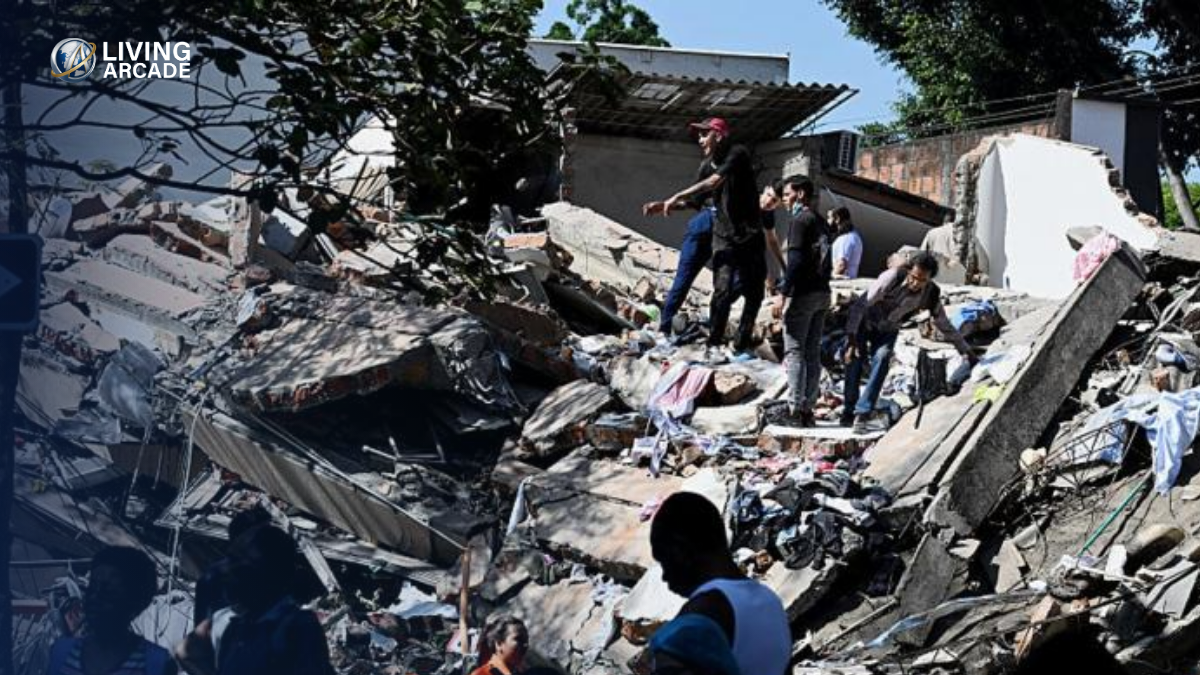
Cali, Colombia – August 11, 2026: The Colombia earthquake has killed at least 164 people as rescue teams continue searching collapsed buildings across the country’s western regions.
The powerful 7.4-magnitude earthquake struck western Colombia on Monday, causing widespread destruction in cities including Cali, Pereira and Manizales. The latest death toll is expected to rise as emergency workers search buildings where people may remain trapped.
The earthquake struck at a depth of about 107 kilometres, according to the U.S. Geological Survey. Colombia’s Geological Service described it as the country’s strongest earthquake recorded in the 21st century.
Rescue Teams Search Collapsed Buildings
Emergency workers, soldiers, police officers and volunteers continued rescue operations through the night.
In Cali, at least 85 people have died, while several buildings suffered major structural damage. Parts of a hospital also collapsed, forcing hundreds of patients to receive treatment outdoors.
Rescue teams have used excavators and their bare hands to search through rubble. In one rescue operation, workers pulled a six-month-old baby and her mother from a collapsed building.
Pereira has also suffered extensive damage, with authorities reporting 66 deaths. Entire sections of some residential buildings collapsed during the earthquake.
Another 13 people died in Chocó, the rural province closest to the earthquake’s epicentre.
Manizales Also Suffers Major Damage
Manizales reported deaths and significant structural damage. One of the towers of the city’s historic cathedral partially collapsed during the earthquake.
The disaster also damaged buildings and infrastructure in several other parts of western Colombia.
Authorities temporarily suspended operations at airports in Pereira, Manizales, Quibdó, Armenia, Cartago and Buenaventura while engineers inspected facilities for structural damage.
Curfews Imposed Amid Security Concerns
The earthquake has also created security challenges in some affected cities.
Authorities imposed curfews in Cali and Pereira after reports of possible looting. Colombia’s newly sworn-in President Abelardo De La Espriella ordered additional security personnel into Cali as rescue and relief operations continued.
The president also declared a national emergency, allowing the government to redirect resources and respond more quickly to the disaster.
Aftershocks Keep Rescue Workers Alert
Colombia’s Geological Service recorded multiple aftershocks following the main earthquake and warned that further tremors could occur.
The country lies along the seismically active Pacific Ring of Fire, making it vulnerable to powerful earthquakes. Experts say the depth of Monday’s earthquake may have reduced some risks, but its enormous magnitude still produced severe shaking across populated areas.
The disaster has brought back memories of Colombia’s devastating 1999 earthquake, which killed more than 1,000 people in the country’s coffee-growing region.
International Support Offered
The scale of the disaster has prompted international offers of assistance.
US Secretary of State Marco Rubio said Washington was monitoring the situation and remained ready to support Colombia. European Commission President Ursula von der Leyen also said the EU’s Copernicus satellite system was supporting rescue and assessment efforts.
El Salvador’s President Nayib Bukele offered personnel and equipment to help with the emergency response.
For now, Colombian rescue teams remain focused on one priority: finding survivors beneath the rubble and delivering aid to communities that have lost homes and essential services.
![Picture of Mahibur Fakir [Hillol]](https://secure.gravatar.com/avatar/5d35a11815be0a5f73b6180975d1521fdd7694c880473d8ad5c74749dce26bd6?s=176&d=mm&r=g)