![Picture of Mahibur Fakir [Hillol]](https://secure.gravatar.com/avatar/5d35a11815be0a5f73b6180975d1521fdd7694c880473d8ad5c74749dce26bd6?s=96&d=mm&r=g)
Ask ten people in Dhaka what a fundamentalist is. You will get ten answers. Some will describe a man with a beard. Some will describe anyone who prays regularly. Some will describe a bomb. Some will describe their neighbour who told their daughter to cover her head.
This confusion is not harmless. It is the single biggest reason the conversation about religion in Bangladesh keeps going nowhere. When every religious person becomes a suspect, the people who are actually dangerous get to hide inside a crowd of 150 million ordinary Muslims.
So let us slow down and separate the words.
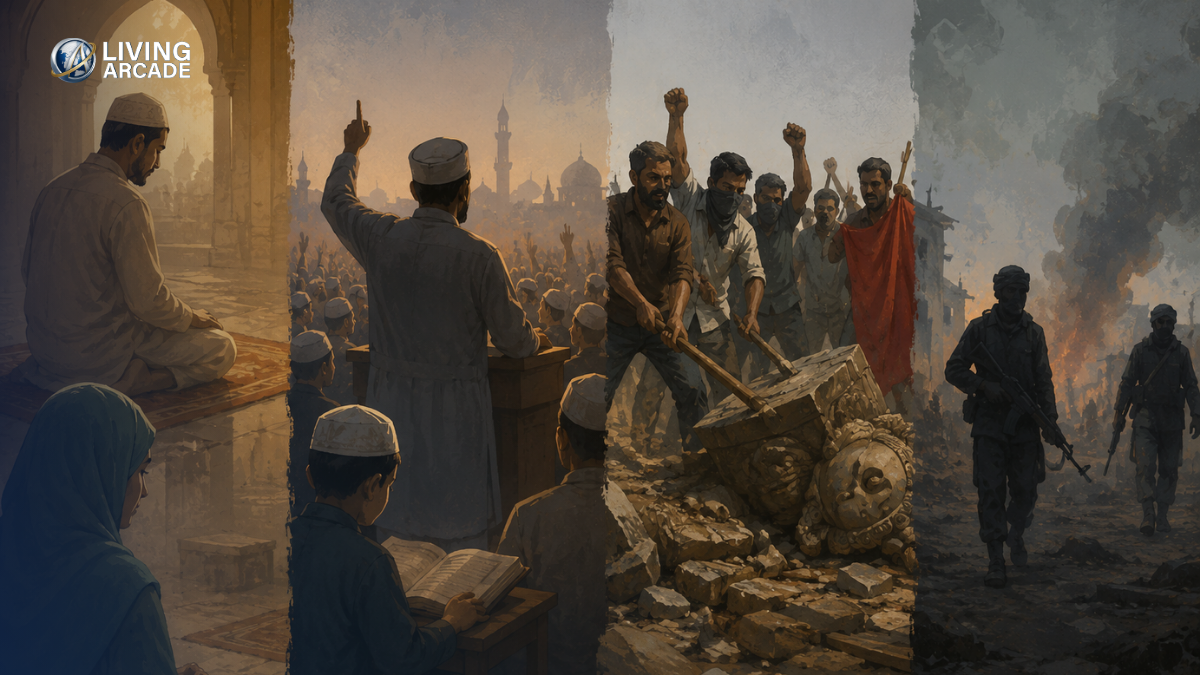
Four different things that keep getting called one thing
One. Personal faith.
A man prays five times a day. A woman wears hijab because she chose to. A family sends their son to a madrasa because it is free and the local school is not. A shopkeeper closes for Jummah.
This is faith. It is the daily life of most people in this country. Around 91 percent of Bangladesh’s population is Muslim. Calling this fundamentalism is not analysis. It is an insult, and it pushes ordinary religious people toward the very groups that claim to defend them.
Two. Religious conservatism.
A person believes society should follow traditional religious values. They vote for parties that say the same. They argue against changes to family law. They think the country has drifted too far from its roots.
You may disagree with every word of that. But this is politics, and it is legal politics. Conservative religious voters exist in Turkey, in Indonesia, in Poland, in the United States. They are not criminals. They are a constituency.
Three. Coercion.
Here is where the line gets crossed.
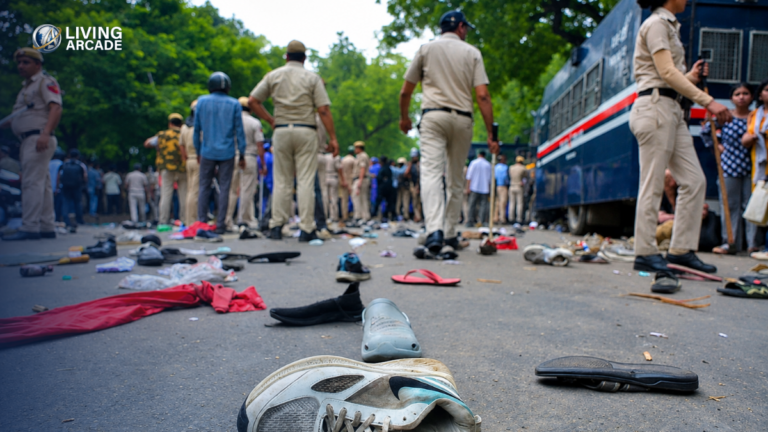
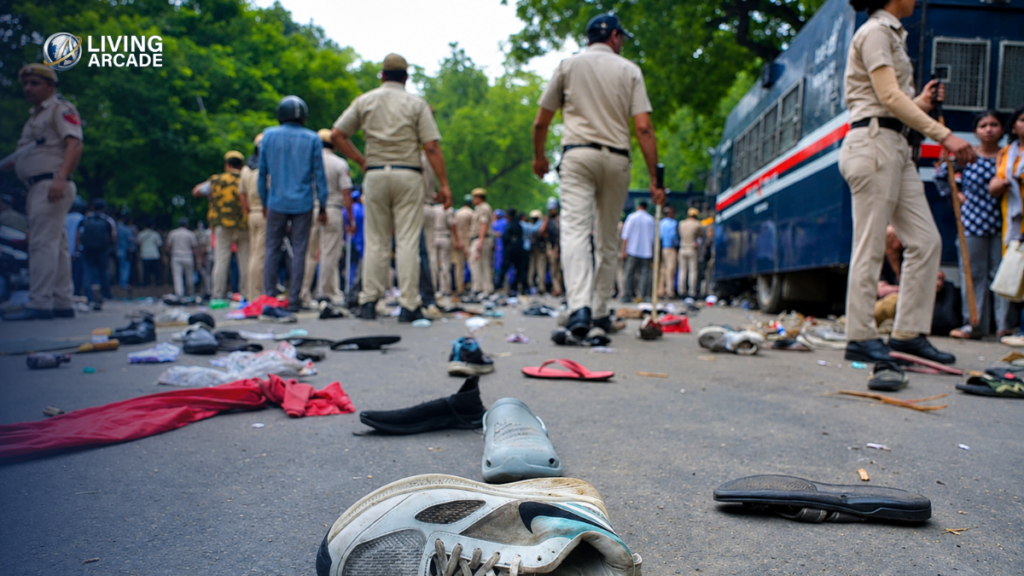
A group decides that a play in Dhaka should not be performed, and it stops being performed. A folk music festival honouring Lalon in Madhupur, Tangail gets cancelled in May 2025 after threats, even though organisers promised nothing controversial would be sung. Women’s football matches in Dinajpur and Rangpur are shut down in early 2025. A food vendor is forced to close during Ramadan daylight hours and made to hold his ears in public.
Nobody voted for this. No court ordered it. A crowd decided, and the state stepped back.
This is not conservatism. This is a group taking the law into its own hands and calling it religion.
Four. Armed militancy.
Groups like Ansar al Islam, Jama’atul Mujahideen Bangladesh and the Islamic State affiliates in the region. Organisations that plan violence, recruit fighters, and kill people.
This is terrorism. It is a police and intelligence problem, and it is a tiny fraction of the population.
Why mixing these up is dangerous
Here is the trap.
If you call category one a fundamentalist, you have just told a devout, peaceful, law-abiding Bangladeshi that the country sees him as a threat. Do that often enough and some of those people will start believing that the only ones defending them are the loudest and angriest voices available.
That is not a theory. That is the recruitment strategy.
Extremist groups do not usually start by preaching violence. They start by saying “they hate you because you are Muslim.” Every time a newspaper or a foreign report treats an entire religious population as a warning sign, that sentence gets a little more believable.
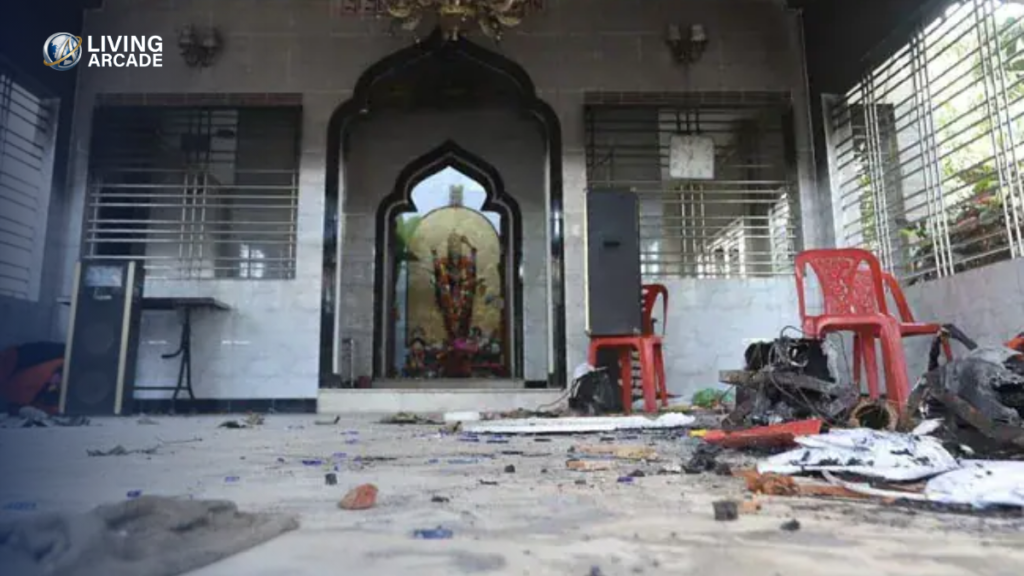
The reverse trap is just as bad. If you refuse to name category three because you are afraid of insulting religion, then mobs get to burn shrines and cancel festivals with nobody willing to describe what is happening.
Accuracy protects everyone. Vagueness protects the mob.
The word Bangladesh actually needs
The most useful distinction is not religious at all. It is about consent.
Does the person want you to live the way they live, and are they trying to convince you?
Or are they trying to force you, and will they hurt you if you refuse?
A preacher who argues is doing what preachers have always done. A crowd that shows up at your door is doing something else entirely. The first is speech. The second is violence, whatever it wears.
By this test, most of Bangladesh’s religious population is not the story. A small, loud, organised and currently unpunished minority is.
The people best placed to say this are Muslims
This is the part that gets left out of foreign coverage.
Back in June 2016, more than 100,000 Islamic scholars, muftis and imams in Bangladesh signed a 62 page fatwa declaring terrorism and militancy haram. It was presented by Maulana Fariduddin Masoud, chairman of Bangladesh Jamiatul Ulama. Their argument was theological, not political. They said the verses militants quote are being cut in half and stripped of context, and that the people carrying them out have been misled.
That was Islamic scholarship pushing back against extremism, in Arabic and Bangla, on religious grounds.
More recently, when moral policing spread during Ramadan 2025, Islamic scholars were among those who publicly condemned it. Their point was simple. Forcing a non Muslim, an elderly person or a sick person not to eat is not a rule found in Islam. It is a rule found in a crowd.
When people in Bangladesh say the fight against extremism has to be led by religious voices, this is what they mean. Not because it is diplomatic. Because it works. A twenty year old is far more likely to listen to an imam he respects than to a newspaper editorial he will never read.
What this means for the months ahead
Bangladesh has come through the July Uprising of 2024, a long interim period, and the February 2026 election. The political map has been redrawn. Religion is now a bigger part of public argument than it has been in decades.
That argument is going to happen either way. The question is whether it happens with the right words.
If we say “the fundamentalists are rising,” we have said almost nothing, and we have insulted a lot of people who deserve better.
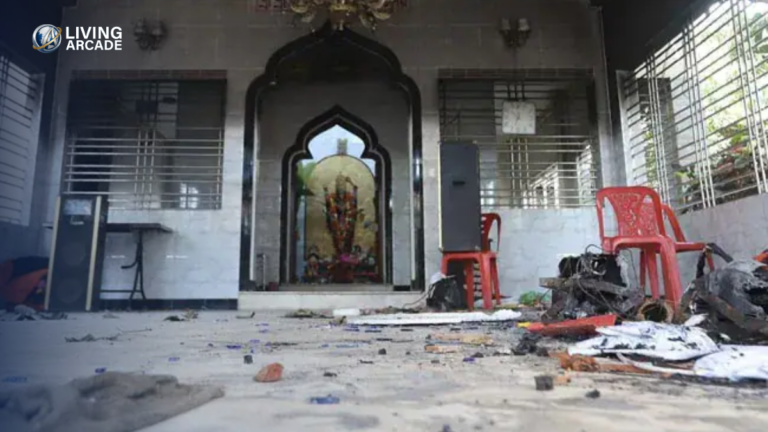
If we say “Hefazat-e-Islam demanded the Women’s Affairs Reform Commission be scrapped,” or “a mob attacked a shrine in Kushtia and nobody was prosecuted,” we have said something real. Something you can check, argue with, or act on.
That precision is not softness. It is the only way to actually name what is happening.
For more on how this debate is playing out across the country, read our full report on religious extremism in Bangladesh, and our breakdown of how Jamaat-e-Islami went from banned to 68 parliamentary seats. We also cover what really happened to Bangladesh’s Sufi shrines since 2024. For ongoing coverage, see our Bangladesh news section and our reporting on Jamaat’s internal disciplinary action against Gazi Nazrul.
![Picture of Mahibur Fakir [Hillol]](https://secure.gravatar.com/avatar/5d35a11815be0a5f73b6180975d1521fdd7694c880473d8ad5c74749dce26bd6?s=176&d=mm&r=g)