
![Picture of Mahibur Fakir [Hillol]](https://secure.gravatar.com/avatar/5d35a11815be0a5f73b6180975d1521fdd7694c880473d8ad5c74749dce26bd6?s=96&d=mm&r=g)
Bangladesh Flood Crisis 2026: Haor Farmers Lose Everything as Rice Fields Go Under Water
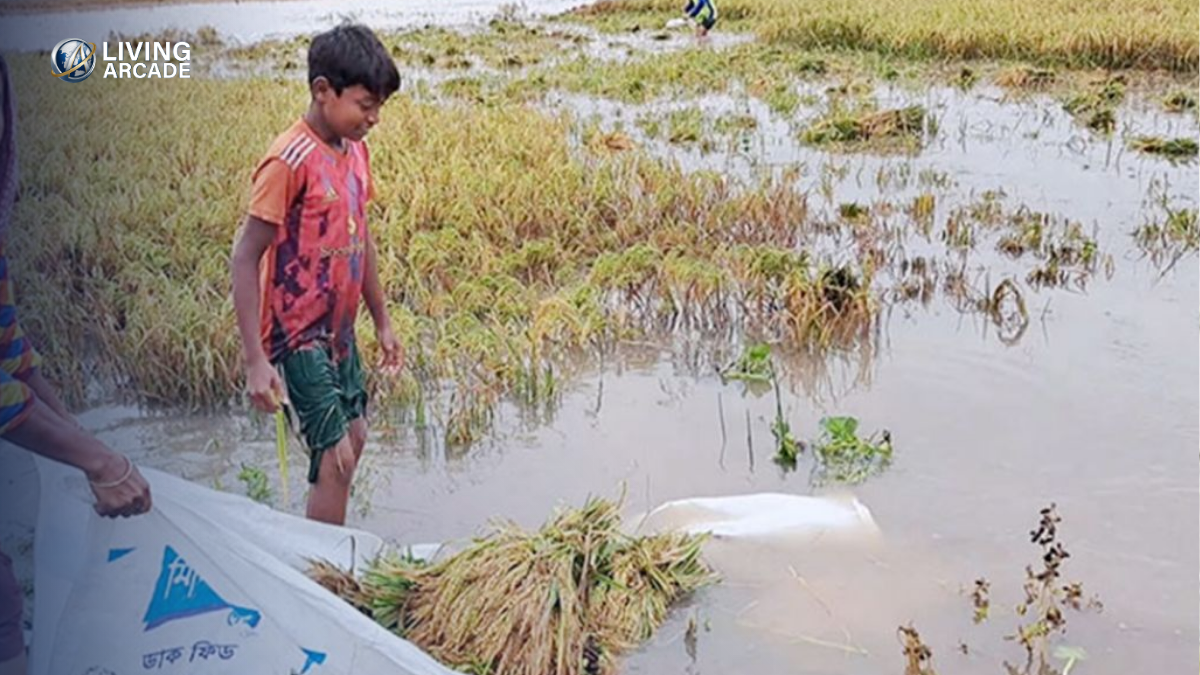
For generations, farmers in the haor wetlands of northeastern Bangladesh have understood the risk of living alongside water. But what is unfolding this season has shattered even that hardened resilience. Floodwaters driven by record pre-monsoon rainfall and upstream inflows have swallowed thousands of hectares of ripening Boro paddy at the very peak of harvest season, triggering a food security alarm that stretches far beyond the flooded fields.
75 Percent Above Normal Rainfall Triggers the Crisis
Bangladesh recorded 75 percent above-normal rainfall in April, fuelled by multiple western depressions, while six river stations in northeastern haor regions exceeded pre-monsoon danger levels. Meteorologist Bazlur Rashid of the Bangladesh Meteorological Department said April rainfall was highly abnormal, persisting for 8 to 10 days instead of the usual 2 to 4 days.
The consequences have been devastating. More than 46,000 hectares of standing crop are submerged, with ripe paddy in some areas beginning to spoil. Officials said losses could rise further if water levels continue to increase.
The Scale of Destruction
The scale of devastation is staggering. More than 112,000 farmers have been affected. In Sunamganj alone, around 16,000 hectares of cultivated land lie underwater, with losses estimated at Tk 3 billion. In Kishoreganj, another 9,049 hectares have been inundated, inflicting nearly Tk 2 billion in damage.
The Department of Agricultural Extension reported that storms, rain, and the onrush of water from upstream areas between March 31 and April 5 affected 1,724 hectares of farmland across six districts, harming 9,525 farmers. On the ground, the situation appears far worse than official figures suggest. Mizanur Rahman, president of the Sunamganj Haor, River and Environment Protection Movement, said waterlogging began about a month ago and intensified sharply after heavy rain over the past few days. He claimed that at least 30,000 hectares of Boro paddy have already been damaged, disputing lower government estimates as far from the reality on the ground.
Farmers Caught in a Desperate Struggle
The human stories emerging from the flooded haors are heartbreaking. Abdur Rahman, an elderly farmer from Moulvibazar, took loans to cultivate Boro paddy this season, hoping for a good harvest and some financial relief. Back-to-back storms, heavy rain, and water flowing from upstream areas destroyed that hope. He said the entire crop field is under two to three feet of water and not a single grain of paddy can be saved, adding that he does not know how he will repay his debts or support his family.
Rayhan Uddin, a farmer from Jatgaon village in Shalla, Sunamganj, said more than half of his fields are submerged. He said he cannot find labourers, and even the paddy he cut cannot be dried because of continuous rain.
Farmers said conditions have worsened as limited sunlight hampers drying of harvested paddy, while labour shortages have slowed cutting. Flooded fields have become difficult to access, pushing wages higher and complicating deployment of workers. A lack of harvesting machinery has further undermined efforts to salvage crops.
A National Food Security Threat
Boro is the dry season irrigated rice crop planted from December to early February and harvested between April and June. The season accounts for over half of all rice production in the country. Seven haor districts alone contributed nearly one fifth of last season’s national output. For Bangladesh, the world’s third largest rice producer, a major disruption to the season’s production could bring disaster for food security.
Agricultural economist Jahangir Alam Khan estimated that Boro production could decline by as much as 20 percent in haor regions and 10 percent nationally, citing fertiliser shortages, rainfall, and upstream flooding. Significant losses could tighten domestic rice supply, lift already high prices and boost import demand.
Cattle Feed Crisis Adds to Farmers’ Pain
The suffering does not end with the rice crop. People living in the haor areas of the Sylhet region are facing a severe crisis in maintaining their cattle as floods have destroyed crops and washed away fodder sources, causing a sharp rise in the prices of cattle feed. The price of hay, the primary feed for cattle, has more than doubled within three months. Hay that was previously sold at Tk 300 to Tk 350 per maund is now being sold at Tk 800 to Tk 850.
Government Response
The government has begun responding. A high-level meeting chaired by Food Secretary Abu Taher Md Masud Rana decided to allow farmers to use private rice mills and government warehouses to dry their paddy with departmental support. The Directorate General of Food will procure the dried paddy directly, and millers are also being encouraged to quickly purchase paddy so the government can maximise procurement while sustaining mill operations. The government has also pledged at least three months of financial assistance to help affected farmers recover.
The crisis in the haor is not simply a story of natural disaster. It is a story of choices, about how resources are allocated, how projects are implemented, and whose voices are heard. Bangladesh has made remarkable strides in agricultural production over the past decades, but those gains cannot be taken for granted. As climate change intensifies and environmental uncertainties grow, the vulnerabilities of regions like the haor will only become more pronounced.
![Picture of Mahibur Fakir [Hillol]](https://secure.gravatar.com/avatar/5d35a11815be0a5f73b6180975d1521fdd7694c880473d8ad5c74749dce26bd6?s=176&d=mm&r=g)