![Picture of Mahibur Fakir [Hillol]](https://secure.gravatar.com/avatar/5d35a11815be0a5f73b6180975d1521fdd7694c880473d8ad5c74749dce26bd6?s=96&d=mm&r=g)
DHAKA, April 24, 2026 — LivingArcade Newsdesk
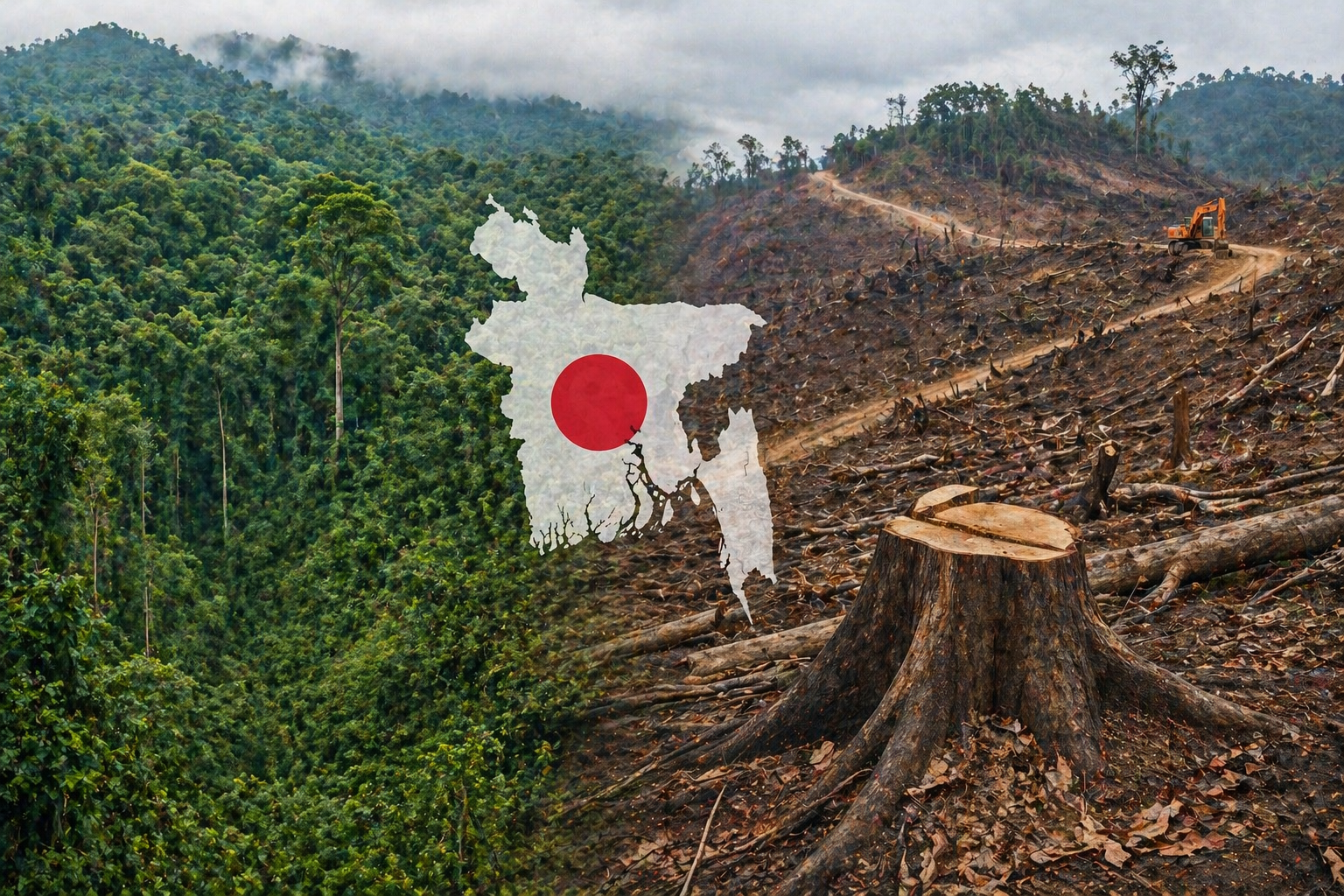
Bangladesh has shed roughly 246,000 hectares of natural forest over the past two decades a 13 percent decline that is directly heating up its cities and pushing the country deeper into climate vulnerability, according to data tracked by global forest monitoring platforms.
The losses are not spread evenly. The Chittagong Hill Tracts have borne the brunt of the destruction. Of all the forested area lost in the greater Chattogram region over 20 years, 76 percent disappeared from just two districts Bandarban and Rangamati. Bandarban alone lost an estimated 84,900 hectares, a staggering figure for a district that was once among the most densely forested parts of the country.
A Forest Crisis with Real Consequences
The consequences of this loss are not abstract. Dhaka and Chattogram Bangladesh’s two largest cities are measurably hotter today than they were two or three decades ago, and scientists link the decline in tree cover directly to the intensification of urban heat islands. Trees and water bodies act as natural cooling systems; without them, dense urban populations are left exposed to dangerous heat with no buffer.
Bangladesh already ranks among the most climate-threatened nations on the planet. It contributes less than half a percent of global greenhouse gas emissions, yet faces some of the most devastating impacts from catastrophic flooding and cyclones to creeping salinity intrusion and land erosion. The destruction of forest cover accelerates all of these threats simultaneously.
What Is Driving the Destruction
The causes are multiple and deeply entrenched. Illegal logging, often facilitated by local syndicates operating with near-impunity, remains the dominant driver in hilly areas. Land grabbing, agricultural expansion, and unplanned infrastructure development compound the problem. In coastal areas, the conversion of mangrove forests into shrimp ponds has wiped out critical natural barriers that once protected communities from cyclone storm surges.
Bangladesh’s forest coverage currently stands at around 15 percent of its total land area well below the internationally recommended 25 percent minimum needed to maintain ecological balance. Experts and urban planners have repeatedly warned that without urgent policy intervention and strict enforcement, the situation will only deteriorate further.
Warnings for 2026
In April this year, environmental monitoring systems flagged more than 22,000 locations across Bangladesh at risk of imminent tree felling, with concerns that hundreds of additional hectares could be cleared in just weeks. The warnings underline that the crisis is not a historical footnote it is happening right now, and accelerating.
Academics and environmental advocates are calling for stronger implementation of existing environmental laws, a moratorium on forest land conversion in high-risk hill districts, and meaningful community involvement in forest protection particularly for indigenous communities in the Chittagong Hill Tracts who have historically managed these ecosystems sustainably.
— LivingArcade Newsdesk
![Picture of Mahibur Fakir [Hillol]](https://secure.gravatar.com/avatar/5d35a11815be0a5f73b6180975d1521fdd7694c880473d8ad5c74749dce26bd6?s=176&d=mm&r=g)