![Picture of Mahibur Fakir [Hillol]](https://secure.gravatar.com/avatar/5d35a11815be0a5f73b6180975d1521fdd7694c880473d8ad5c74749dce26bd6?s=96&d=mm&r=g)
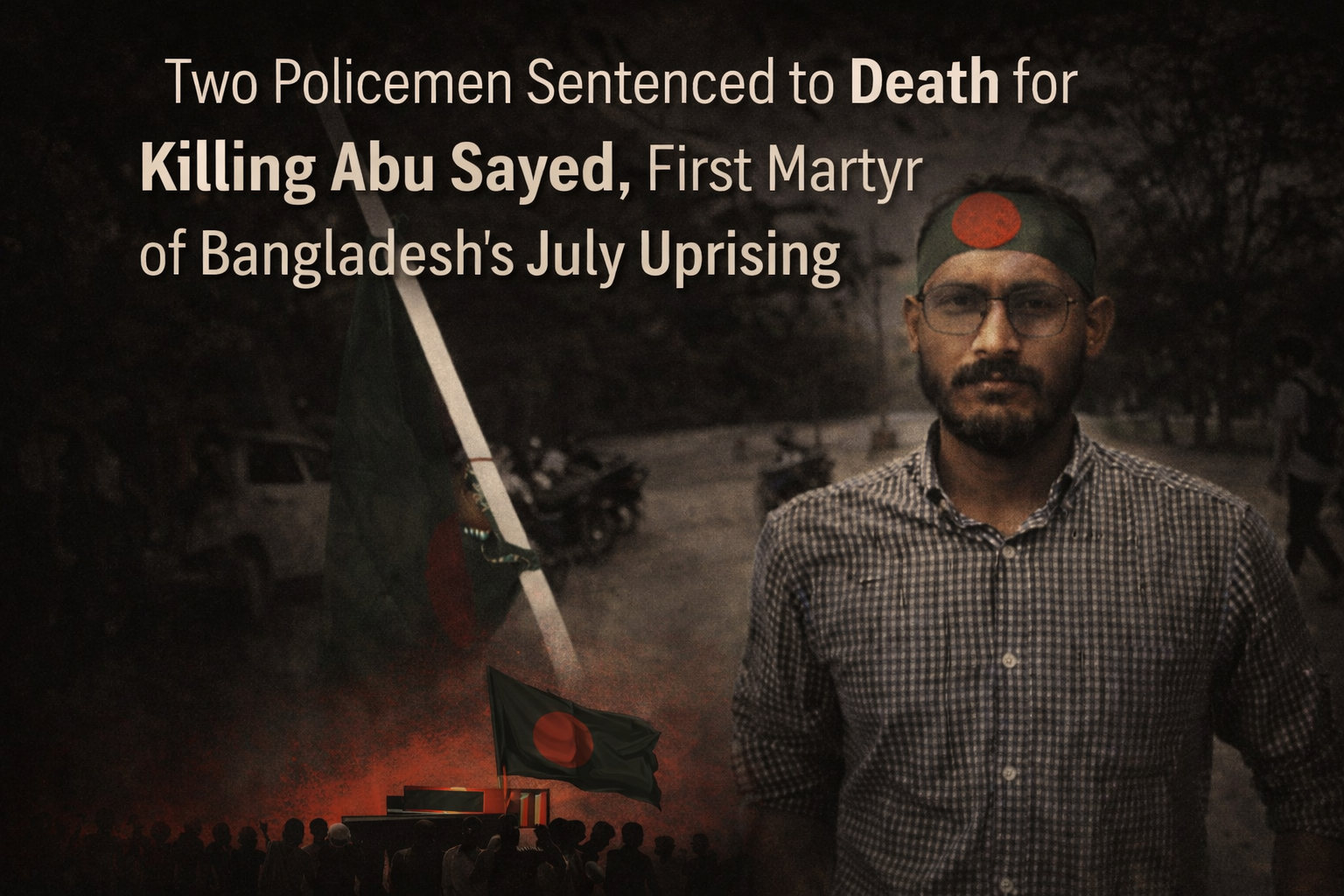
DHAKA, April 10, 2026 — Nearly twenty-one months after a police bullet cut down Abu Sayed in broad daylight on the campus of Begum Rokeya University in Rangpur, Bangladesh’s International Crimes Tribunal delivered justice on Thursday in the form that his family had demanded from the beginning: death.
The International Crimes Tribunal-2, led by Justice Nazrul Islam Chowdhury, sentenced two individuals to death and three others to life imprisonment in the case concerning crimes against humanity related to the killing of Abu Sayed, the first martyr of the July mass uprising. The tribunal also handed down varying prison terms to the remaining 25 accused. Prothomalo
The two convicts sentenced to death are former Assistant Sub-Inspector Amir Hossain and former constable Sujan Chandra Roy, both of whom are currently in custody. Prothomalo The verdict was broadcast live on Bangladesh Television, a rare public transparency measure for proceedings of this gravity, underscoring the national significance the case had acquired since the moment Abu Sayed spread his arms wide and walked toward police guns on July 16, 2024.
That image, captured on camera and broadcast around the country and the world, became the face of an uprising.
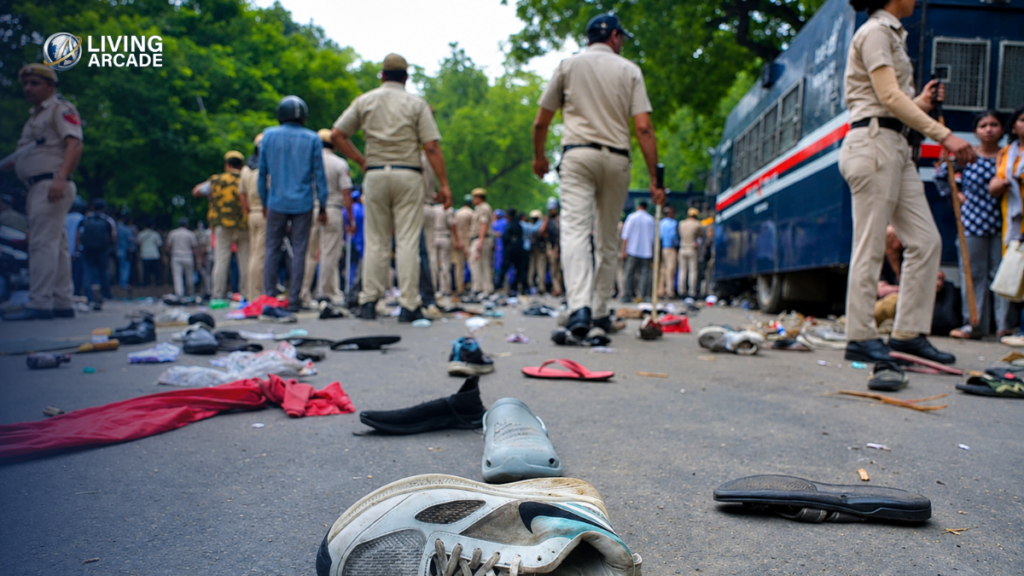
According to the prosecution, shortly before Abu Sayed’s death on July 16, 2024, the then proctor of the university allegedly forced students off the campus with the help of Bangladesh Chhatra League activists, after which two policemen reportedly fired at Abu Sayed at close range. He collapsed and was declared dead on arrival at Rangpur Medical College Hospital. Bangladesh Sangbad Sangstha
The case that followed was built on extensive testimony. The prosecution recorded statements from a total of 25 witnesses, including eyewitnesses, experts, journalists, doctors, and police personnel. Individuals who were shot alongside Abu Sayed testified in court, as did current Member of Parliament Hasnat Abdullah. CCTV footage from the scene and live television broadcasts were submitted as evidence. The Business Standard
The defense attempted to chip away at the forensic foundation of the case. Defense lawyers argued that no bullet wounds were found in radiography or X-ray examination of Abu Sayed’s body, and that there was no hole in the black T-shirt he was wearing from his neck to his waist. They contended that it had not been proven beyond reasonable doubt that he died from a bullet wound. BD News 24 The three-member bench rejected those arguments and found all 30 accused guilty of crimes against humanity.
The moment of sentencing produced a raw and defiant outburst inside the courtroom. As police escorted former ASI Amir Hossain from the court premises after the verdict, he shouted that he was a police officer who had followed orders and questioned why he had been given the death penalty. “I am a police officer, I followed orders. Why have I been given the death penalty? I have been wronged. I do not accept this verdict,” he was heard shouting. He also chanted “Joy Bangla” and claimed he had acted on instructions, asking why he alone was being punished. Dhaka Tribune
The outburst laid bare the central moral and institutional question that the tribunal’s verdict attempted to answer: that following orders is not a defense when those orders amount to crimes against humanity.
The three individuals sentenced to life imprisonment are also former police officers: former Assistant Commissioner Md Arifuzzaman, former Inspector Rabiul Islam, and a former Sub-Inspector. Prothomalo Among those who received lesser but still significant terms, former Deputy Commissioner of the Rangpur Metropolitan Police received five years of rigorous imprisonment, as did a former Additional Deputy Commissioner. The president of the university unit of Bangladesh Chhatra League was sentenced to ten years and remains absconding. Prothomalo
The scale of those still at large remains a source of frustration. A total of 30 individuals were accused in this case, including former Vice-Chancellor of Begum Rokeya University Md Hasibur Rashid, and the remaining 24, including senior police officials and university administrators, remain on the run. Prothomalo
Abu Sayed’s family arrived at the tribunal Thursday morning with a singular demand and left with mixed feelings. His mother Monowara Begum said that execution of the verdict would bring peace to her son’s soul. His father Mokbul Hossain, however, expressed dissatisfaction, saying more of the accused could have received the death penalty. His elder brother Abu Raihan called for the execution of all those involved, saying it would ensure full justice. The Business Standard
Before the verdict, Abu Sayed’s brother Abu Hossain told journalists: “Those who are still absconding should be arrested quickly, and the government must ensure the verdict is implemented.” Dhaka Tribune That demand for implementation will now test the government of Prime Minister Tarique Rahman, which came to power in February on the moral legitimacy of the uprising Abu Sayed died for.
Chief Prosecutor Md Aminul Islam told journalists ahead of the verdict that Abu Sayed was one of the central martyrs of the July movement, who had fallen victim to a brutal killing witnessed by the entire nation and people around the world. Prothomalo
The verdict is historic in its own right. It is the first completed trial to emerge from the July 2024 uprising and the first time the International Crimes Tribunal, previously used to prosecute crimes from the 1971 liberation war, has been applied to state violence in the contemporary era. Whether it signals the beginning of a comprehensive accountability process or remains an isolated milestone will depend on how aggressively the tribunal pursues the nearly two dozen accused who remain fugitives, including the former vice-chancellor and multiple senior police commanders.
For the family of a young man who chose to open his arms rather than run, Thursday’s verdict is a measure of justice. Whether it is enough, only they can say.
![Picture of Mahibur Fakir [Hillol]](https://secure.gravatar.com/avatar/5d35a11815be0a5f73b6180975d1521fdd7694c880473d8ad5c74749dce26bd6?s=176&d=mm&r=g)