![Picture of Mahibur Fakir [Hillol]](https://secure.gravatar.com/avatar/5d35a11815be0a5f73b6180975d1521fdd7694c880473d8ad5c74749dce26bd6?s=96&d=mm&r=g)
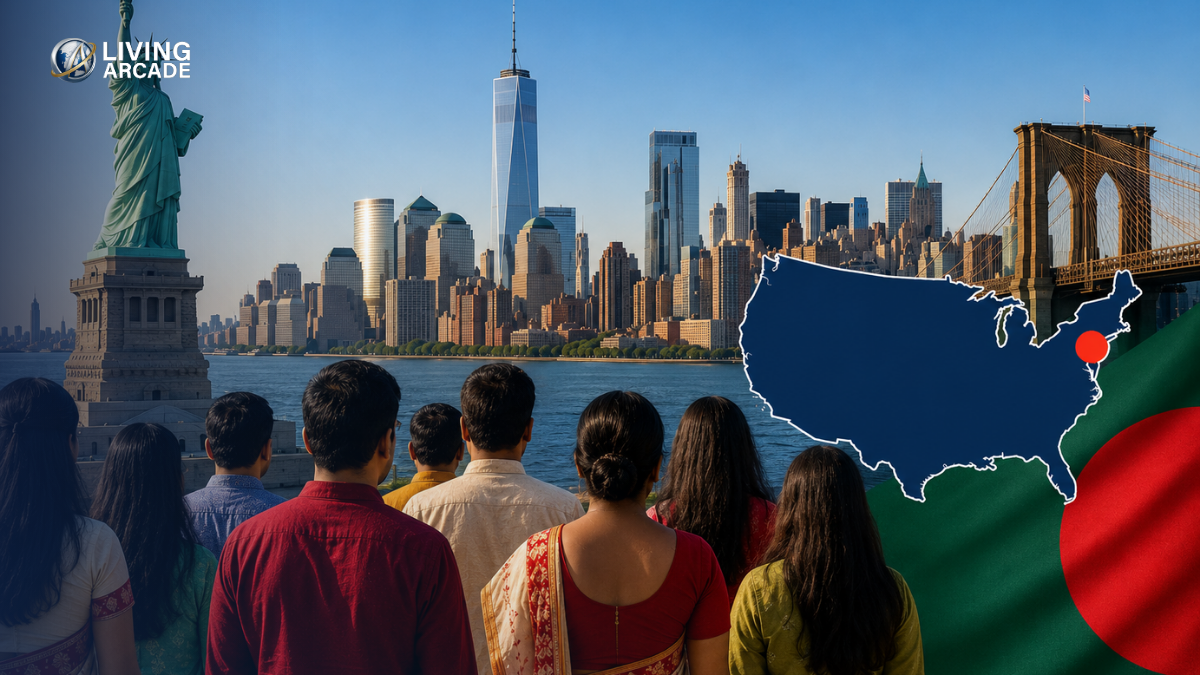
New York City Emerges as the Largest Hub for Bengali Americans in the United States
New York City has become the largest center of Bengali Americans in the United States, with rapidly growing communities spread across Queens, Brooklyn, the Bronx, Manhattan, and Staten Island. Community estimates suggest that more than 165,000 Bengalis currently live in New York City, while over 250,000 Bangladesh-born residents live across New York State.
Since the 1970s, New York has remained one of the top destinations for Bangladeshi immigrants seeking better economic opportunities and a stronger future for their families. Today, neighborhoods like Jackson Heights, Jamaica, Kensington, and Parkchester have become vibrant cultural centers filled with Bengali restaurants, grocery stores, bookstores, mosques, clothing shops, and community organizations.
Bengali Language and Cultural Presence Continue to Grow
The Bengali language has become deeply rooted in several parts of New York City, especially in Queens. In neighborhoods such as Jackson Heights and Jamaica, thousands of households speak Bengali at home, reflecting the strong cultural identity maintained by the community.
The Bengali population in New York has also experienced one of the fastest growth rates among Asian-origin communities in recent decades.
Bangladeshi Immigrant Day Recognized in New York
New York State officially recognizes September 25 as Bangladeshi Immigrant Day, honoring the contributions of Bangladeshi immigrants to the state’s cultural and economic development. The recognition especially highlights the influence of the Bangladeshi community in Queens and across New York City.
Vibrant Festivals and Community Celebrations
Bengali cultural life in New York remains highly active throughout the year. Large celebrations of Pohela Boishakh, the Bengali New Year, are held annually in Jamaica, Jackson Heights, and Brooklyn, attracting thousands of participants with colorful processions, traditional food, music, and performances.
The city also hosts Bengali book fairs, cultural programs, and literary gatherings that connect expatriate writers, publishers, artists, and readers from across North America.
One of the most prominent events is the North American Bengali Conference, first held in New York in 1981. The conference has evolved into one of the largest Bengali gatherings in North America, featuring music, dance, literature, and professional networking opportunities.
Bengali Businesses Strengthen New York’s Economy
The Bengali community has made a strong impact on New York’s local economy, especially through small businesses and entrepreneurship.
Commercial areas in Jackson Heights and Jamaica are filled with Bengali-owned restaurants, supermarkets, mobile food carts, travel agencies, and clothing stores. Bengali street food culture, particularly fuchka trucks, has become increasingly popular and serves as a symbol of cultural identity for immigrants living far from home.
These businesses also create employment opportunities for newly arrived immigrants while preserving the atmosphere of Dhaka and Kolkata street life in New York City.
Community Financing Helps Families Build Wealth
Many Bengali entrepreneurs rely on community-based financial systems rather than traditional bank loans. Informal rotating savings systems, locally known as “tapat,” allow trusted community members to contribute money monthly so that one member can receive a larger lump sum for business or housing needs.
Community organizations have supported these initiatives, helping many Bengali families transition from renting apartments to owning homes and building long-term financial stability.
Bengali Media Thrives Across New York
The Bengali-language media industry in New York continues to grow rapidly.
Newspapers such as Weekly Bangalee, Weekly Thikana, and Weekly Aajker Probash provide news and information tailored to Bengali-speaking audiences in the United States.
Television channels including ATN Bangla USA, ABTV, TBN24, and Time Television focus heavily on diaspora experiences, immigration issues, culture, and community affairs.
Meanwhile, Bengali radio stations such as Radio Tritaal Bangla and Radio Ruposhi Bangla operate around the clock, offering music, news, talk shows, and cultural programming for listeners across America.
A Community That Continues to Shape New York
From culture and cuisine to business and media, Bengali Americans have become an essential part of New York City’s multicultural identity. As immigration continues and younger generations grow up in the United States, the Bengali community’s influence across the city is expected to expand even further in the coming years.
![Picture of Mahibur Fakir [Hillol]](https://secure.gravatar.com/avatar/5d35a11815be0a5f73b6180975d1521fdd7694c880473d8ad5c74749dce26bd6?s=176&d=mm&r=g)