![Picture of Mahibur Fakir [Hillol]](https://secure.gravatar.com/avatar/5d35a11815be0a5f73b6180975d1521fdd7694c880473d8ad5c74749dce26bd6?s=96&d=mm&r=g)
A community on the rise in New York
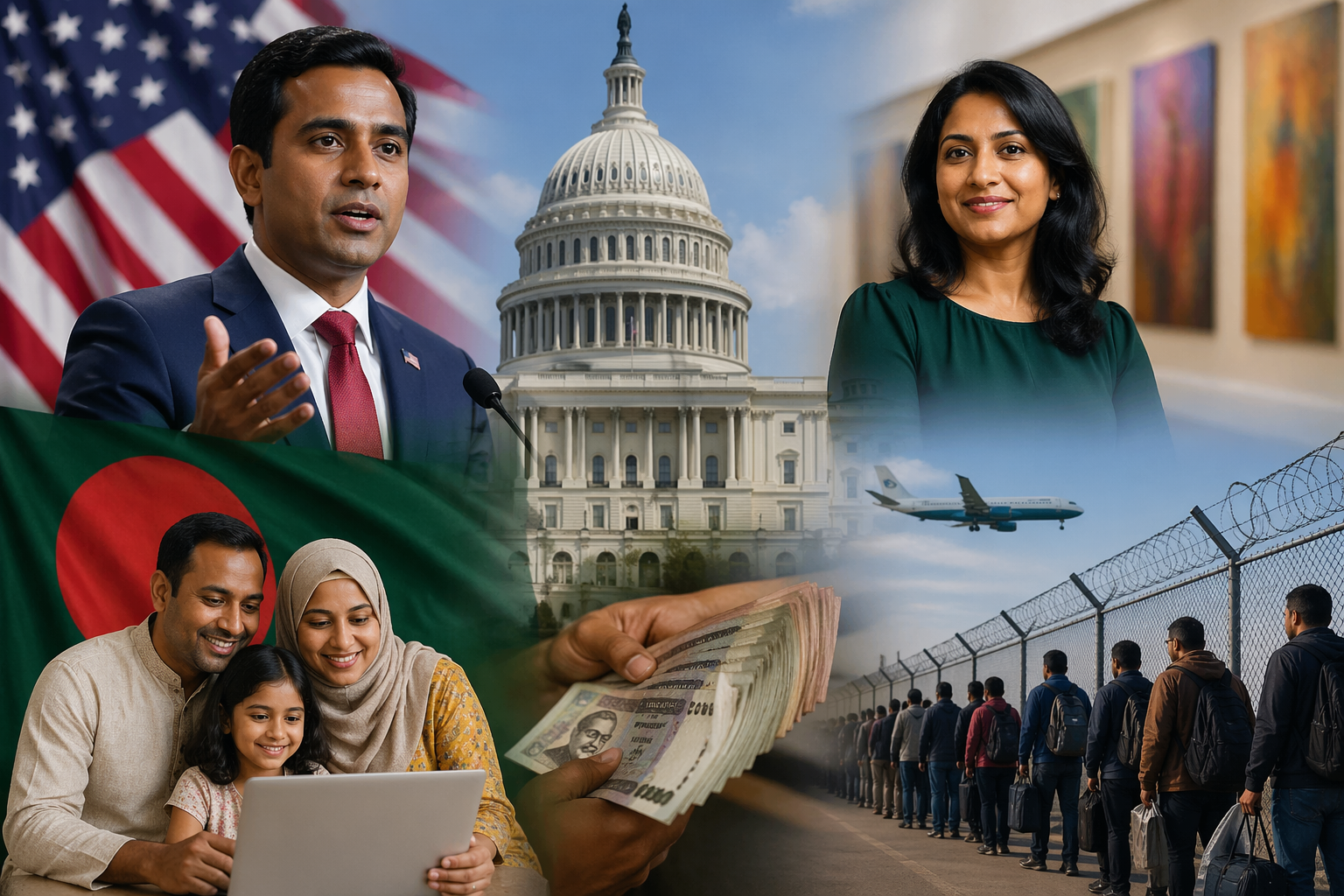
In the opening months of 2026, the Bangladeshi American community has made its presence felt like never before in city halls, cultural stages, and in the billions of dollars flowing back to Bangladesh each month. For a diaspora that has quietly built its roots in the United States over five decades, this moment feels different.
When Zohran Mamdani was sworn in as the 112th Mayor of New York City on January 1, 2026 taking his oath on the Quran in an abandoned City Hall subway station it sent a powerful signal to Muslim and South Asian communities across the five boroughs. Though Mamdani himself is of Indo-Ugandan descent, his election has energized the Bangladeshi American community, which had a tangible presence in his transition process.
ATM Kamrul Hasan, brother of slain NYPD Detective Didarul Islam one of the most painful names in the Bangladeshi American collective memory was named to Mamdani’s inaugural committee, a symbolic but meaningful gesture of inclusion in the new administration’s vision for New York City.
“It’s like my community. My people, my culture. Our groceries, our restaurants everything is here.”
Little Bangladesh: Bronx’s Parkchester thrives
If you want to understand where the Bangladeshi American community has planted its deepest roots in New York, walk down Unionport Road and Starling Avenue in the Bronx’s Parkchester neighborhood. Known affectionately as “Little Bangladesh,” the area is a living, breathing hub of Bengali culture from clothing vendors and mosques to supermarkets stocked with imported goods unavailable elsewhere in the city.
A 2024 Data USA survey found Bengali spoken in more than 12,200 households in the Parkchester and Soundview area accounting for 7.7% of the district’s population. The neighborhood is anchored by figures like Mohammed Mujumder, the longest-serving member of Community Board 9 and the first person of Bangladeshi descent to chair a New York City community board.
Beyond Parkchester, the larger Bangladeshi population in New York is concentrated in the Queens neighborhoods of Jamaica, Jackson Heights, Hollis, and Briarwood where Bangladeshi restaurants, grocery stores, and cultural events form the backbone of daily life for thousands of families.
Pahela Baishakh: Heritage celebrated across the US
April brought the joyous celebration of Pahela Baishakh Bengali New Year 1433 to Bangladeshi communities across the United States. In New York, a major event was held at the Jamaica Performing Arts Center in Queens on April 18, 2026, under the theme “From Heritage to Horizon,” drawing hundreds of community members in traditional dress for music, food, and cultural performances.
Across the country from California to Michigan Eid gatherings and New Year celebrations have brought together thousands, reinforcing the community’s commitment to preserving language, tradition, and identity far from their homeland.
US–Bangladesh diplomatic ties strengthened
On the diplomatic front, US Ambassador to Bangladesh Brent T. Christensen met with Bangladesh’s Commerce Minister Khandaker Abdul Muktadir on April 21, 2026, reaffirming the two countries’ commitment to expanding cooperation across trade, investment, and policy sectors. Earlier in February, the United States and Bangladesh had signed a landmark reciprocal trade framework agreement, with the US reducing its tariff rate on Bangladeshi goods to 19 percent a significant development that directly benefits the economic bridge the diaspora helps maintain between the two nations.
Immigration headwinds: A community navigating change
The community’s progress has not come without challenges. Since early 2026, stricter US immigration enforcement policies have cast a shadow over many Bangladeshi families. Reports emerged of the deportation of approximately 36 Bangladeshis as part of a broader crackdown on undocumented residents a deeply felt blow for a community where many members have complex and layered immigration histories.
Visa processing changes introduced in January 2026 have also created anxiety, particularly for families hoping to reunite or for students looking to continue their education in the United States. Despite this, the academic footprint of Bangladeshis in the US remains significant and growing.
Community’s economic lifeline: Remittances flow home
Perhaps no measure captures the reach and dedication of the Bangladeshi diaspora more powerfully than remittances. Bangladeshi expatriates worldwide including a major share from the United States continue to serve as a pillar of Bangladesh’s economy. The scale of this contribution underscores why diplomatic and immigration policy developments in Washington are watched so closely in Dhaka, and in every Bangladeshi household that has a loved one living and working in America.
As the community looks ahead, its leaders and advocates are focused on voter registration drives, civic engagement campaigns, and ensuring that the stories of Bangladeshi Americans their sacrifices, their celebrations, and their growing influence are written not just in community newspapers, but in the laws and leadership of the cities they now call home.
![Picture of Mahibur Fakir [Hillol]](https://secure.gravatar.com/avatar/5d35a11815be0a5f73b6180975d1521fdd7694c880473d8ad5c74749dce26bd6?s=176&d=mm&r=g)