![Picture of Mahibur Fakir [Hillol]](https://secure.gravatar.com/avatar/5d35a11815be0a5f73b6180975d1521fdd7694c880473d8ad5c74749dce26bd6?s=96&d=mm&r=g)
DHAKA — March 10, 2026
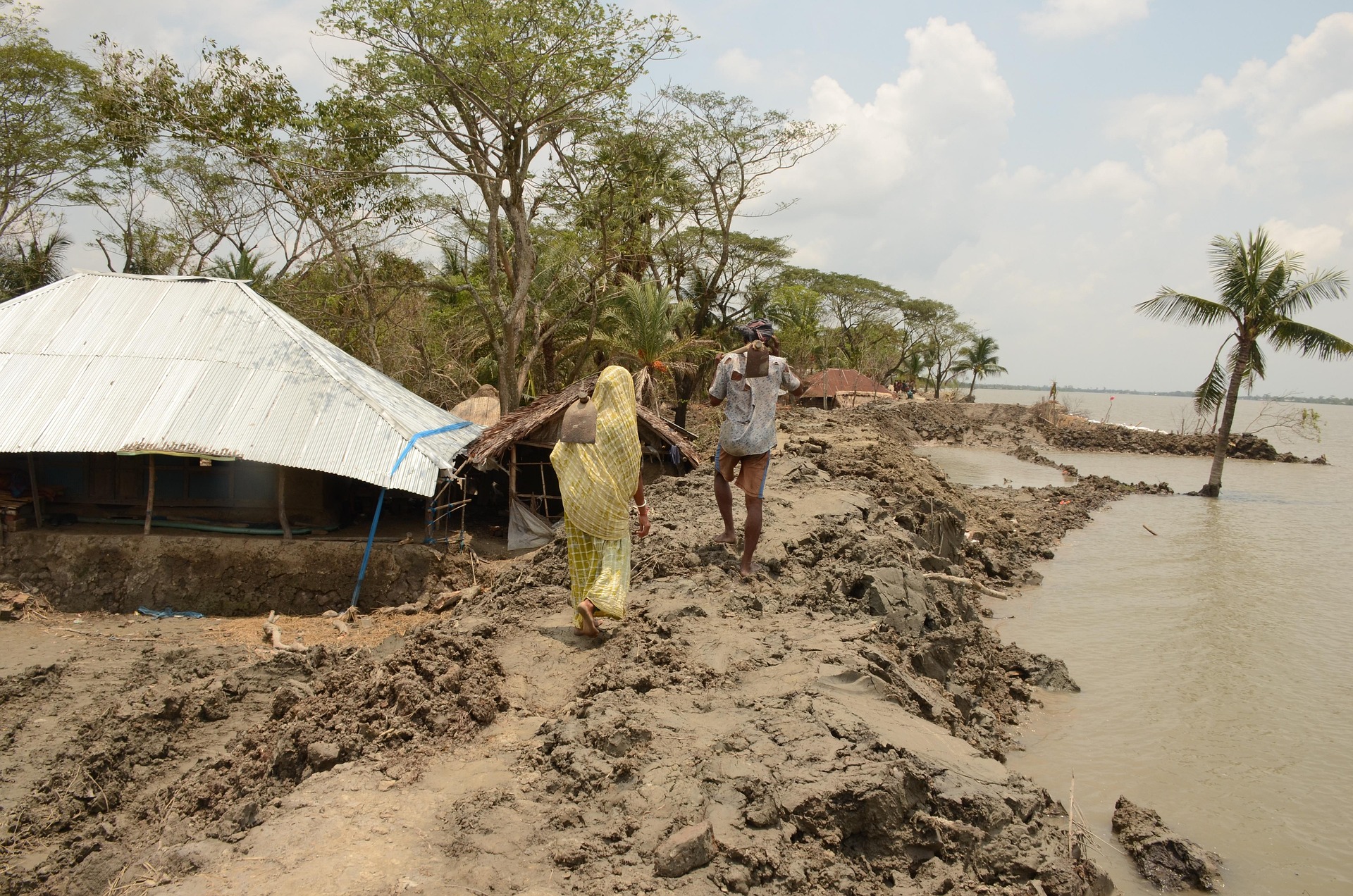
Stand anywhere along Bangladesh’s southern coastline — in the Sundarbans, in Satkhira, in Bagerhat or Bhola — and you will understand something that no climate summit, no scientific report, and no political speech can fully capture. The land is disappearing. Quietly, relentlessly, and without apology.
Bangladesh did not cause the climate crisis. It is paying for it anyway — with its land, its crops, its homes, and its children’s futures. This is the story of what is happening, why it matters, and how long Bangladesh can hold on.
A Nation Built on Water — Now Drowning In It
Geography gave Bangladesh its beauty and its curse. Sitting at the mouth of three of Asia’s mightiest rivers — the Ganges, the Brahmaputra, and the Meghna — the country is essentially a vast, breathing delta. It is lush, fertile, and extraordinarily vulnerable.
Almost 70 percent of Bangladesh’s land area lies less than one metre above sea level, and 80 percent of it is located in a floodplain — making it one of the most geographically exposed nations on earth to the effects of climate change. NPR
A staggering 90 million Bangladeshis — 56 percent of the population — live in high climate exposure areas, with 53 million subject to very high exposure. NPR These are not statistics in a distant future. They are the present reality of millions of families who wake up every morning not knowing whether this monsoon season will be the one that takes their home.
Rising Seas: The Slow-Motion Catastrophe
Of all climate threats facing Bangladesh, sea level rise is perhaps the most irreversible. Sea levels in Bangladesh are predicted to rise by up to 0.30 metres by 2050 — displacing 0.9 million people — and by up to 0.74 metres by 2100, displacing a further 2.1 million. CNN
More than 20 lakh people are already at risk of frequent flooding from storm surge combined with tidal activity, with Barisal, Chittagong, and Khulna being the divisions holding the greatest risk. ABC News
As sea water creeps inland, it does something just as devastating as flooding — it poisons the soil. Salt water intrusion is turning productive agricultural land across the coastal belt into barren, useless ground. Crops fail. Farmers abandon their ancestral fields. Villages empty out. And the people who once fed themselves and their communities join the swelling tide of climate migrants heading toward Dhaka.
Cyclones: Getting Stronger, More Frequent, More Deadly
Bangladesh’s low-lying coast, home to 8 million people, is highly vulnerable to tropical cyclones and storm tides. Under a warming climate, sea levels will rise and tropical cyclones will intensify — likely elevating the risk of coastal flooding and overwhelming existing flood defences. LiveNOW from FOX
The Bay of Bengal acts almost like a funnel — its narrowing shape toward Bangladesh’s southern coast both directs cyclones toward land and amplifies their intensity, meaning that storm surges, when they come, are absolutely devastating across Bangladesh’s flat terrain. NPR
The historical record is chilling. The catastrophic cyclone of 1991 alone killed an estimated 140,000 people and left 10 million homeless. More recently, Cyclone Amphan’s storm surge flooded up to 15 kilometres inland and forced 500,000 families from their homes. CNN
Over the last decade, on average, nearly 700,000 Bangladeshis were displaced every single year by natural disasters NPR — a number that spikes sharply during major cyclone years, and one that experts warn will only grow as warming intensifies.
Farmland Under Threat — And the Food Crisis That Follows
Bangladesh feeds itself primarily through rice. But climate change is steadily dismantling the conditions that make that possible. Total rice production in Bangladesh is projected to fall by 7.4 percent every year until 2050. PBS
Over 85 percent of rural Bangladeshi households rely on agriculture for their livelihood. Floods, droughts, and shifting rainfall patterns due to climate change will negatively impact food and nutritional security as farmers’ dependence on groundwater and pesticides increases, while agricultural output steadily decreases. PBS
Meanwhile, the melting of Himalayan glaciers is threatening Bangladesh’s river system, causing severe flooding and water-logging across 55 percent of the country’s land area PBS — a long-term structural change that no embankment or drainage system can fully reverse.
From Village to Slum: The Human Face of Climate Migration
When the river swallows a village, its people do not disappear — they move. Almost always, they move to Dhaka. Up to 50 percent of those now living in Bangladesh’s urban slums may be there because they were forced to flee their rural homes as a result of riverbank erosion and flooding. NPR
But Dhaka offers no refuge from climate stress — only a different form of it. The overpopulation of cities, the lack of employment, and inadequate working conditions compel climate migrants into low-skilled jobs, contributing to 4.4 million people living in slums. PBS Urban climate migrants face what researchers call “double insecurity” — they lost their land, and now they struggle daily simply to afford shelter and food.
Bangladesh’s rapid and forced urbanization is outpacing the necessary infrastructure development, deepening daily challenges for millions and heightening tensions between established residents and new arrivals. PBS
Health Crisis Hiding in Plain Sight
Climate change in Bangladesh is also a public health emergency in slow motion. Air pollution — driven by factory emissions and agricultural pesticides — is responsible for 18 percent of deaths in Bangladesh, increasing rates of respiratory infections, lung cancer, and cardiovascular disease. PBS
The population of Dhaka has been struggling with a dengue outbreak since 2019, which is projected to worsen in coming years as rising temperatures extend the breeding season of disease-carrying mosquitoes. PBS Waterborne diseases thrive in flood-affected areas, and repeated inundation destroys tube wells and health clinics — the very infrastructure communities need most when disaster strikes.
Resilience: Bangladesh’s Quiet Superpower
Bangladesh is not simply a victim. It is also, quietly, a global leader in climate adaptation — born of necessity.
Development organisations have recruited community volunteers who spread early government weather warnings to even the most remote villages. Financial institutions like BRAC Bank and the SAJIDA Foundation are using micro-credit and insurance to help vulnerable people rebuild resilience to repeated floods. NPR
Farmers across the waterlogged southwest have pioneered floating gardens — meshing water hyacinth, bamboo, and compost into buoyant platforms where vegetables grow above the floodline. Architect Mohammed Rezwan has taken schools, libraries, and clinics onto the water itself, operating a fleet of flat-bottomed boats that bring education and healthcare to communities that seasonal floods routinely cut off from the rest of the country.
Government policy has increasingly shifted toward a “living with floods” approach — discouraging settlement in high-risk zones, promoting flood-resistant housing, and building climate-resilient agriculture practices NPR rather than relying solely on embankments that have repeatedly proven inadequate.
The Price Tag the World Refuses to Pay
None of this is cheap. And Bangladesh cannot foot the bill alone for a crisis it did not create. The country contributes less than half a percent of global greenhouse gas emissions — yet it ranks among the world’s most climate-punished nations.
The Bangladesh Delta Plan 2100, launched in 2018, aims to address the sea level rise threat through long-term infrastructure and adaptation investment CNN — but as of the most recent review, the plan is still falling well short of its targets, leaving tens of millions still at unacceptable risk.
Experts at the Grantham Research Institute are unambiguous: higher-income countries are primarily responsible for the climate crisis, and all nations must work toward net zero emissions by 2050. For Bangladesh, transitioning away from coal toward renewables like solar and wind would not only cut emissions — it would directly boost energy security and strengthen the country’s capacity to adapt to flooding. NPR
The funding gap remains enormous. The world’s climate finance promises to vulnerable nations have consistently fallen short. And Bangladesh, as always, is left adapting with what it has.
The Verdict
Bangladesh’s climate story is not a future warning. It is a present emergency. Millions of people are already living the consequences of a warming world they did not warm. Their courage, resilience, and ingenuity deserve admiration — but what they need most is action. Faster emissions cuts from the countries that caused this crisis. More climate finance. And a world that stops treating Bangladesh as a cautionary tale and starts treating it as an urgent call to responsibility.
The land is sinking. The clock is running. And Bangladesh is watching to see if the world will finally listen.
![Picture of Mahibur Fakir [Hillol]](https://secure.gravatar.com/avatar/5d35a11815be0a5f73b6180975d1521fdd7694c880473d8ad5c74749dce26bd6?s=176&d=mm&r=g)