![Picture of Mahibur Fakir [Hillol]](https://secure.gravatar.com/avatar/5d35a11815be0a5f73b6180975d1521fdd7694c880473d8ad5c74749dce26bd6?s=96&d=mm&r=g)
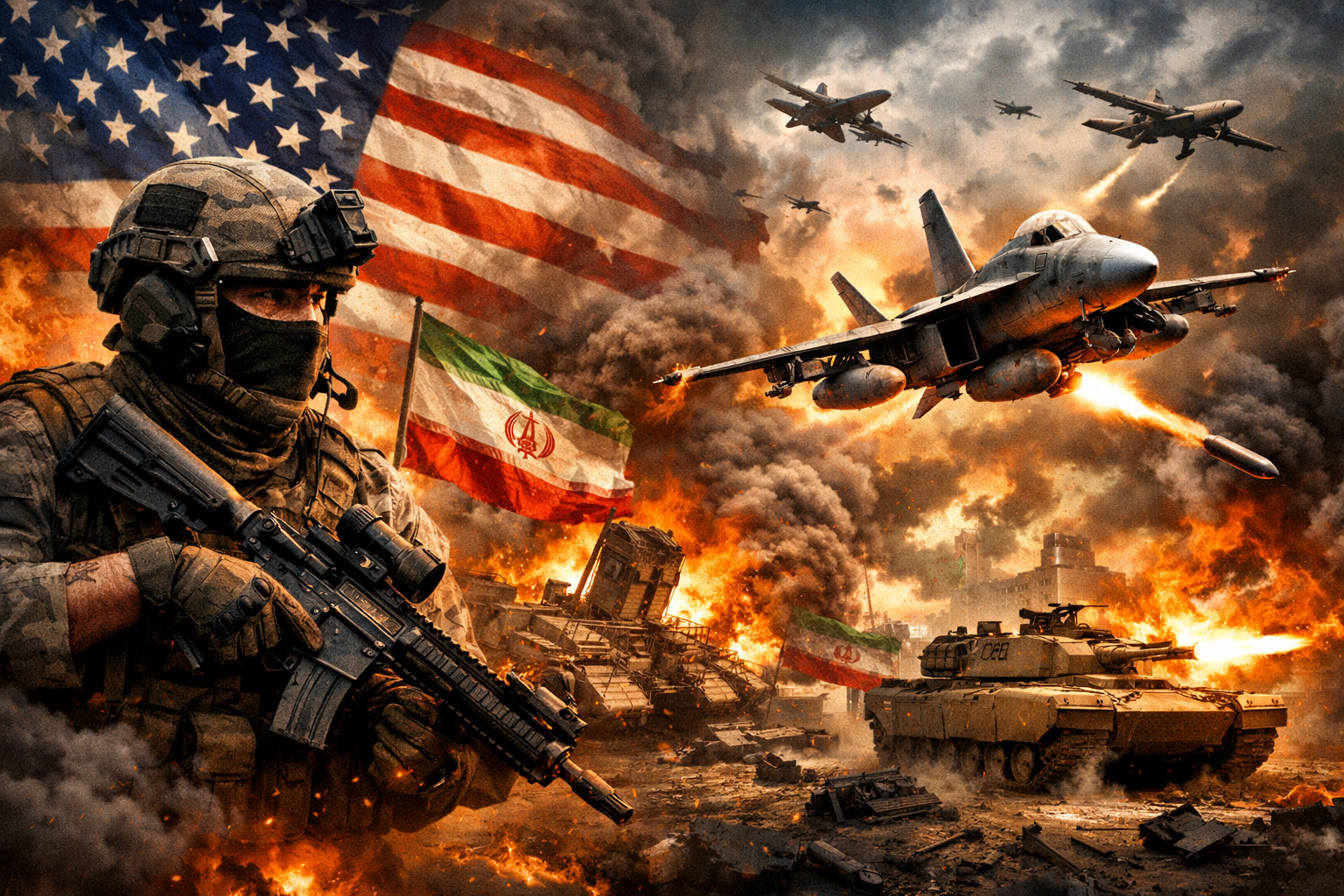
WASHINGTON, D.C. — Eleven days after President Donald J. Trump authorized what military analysts are calling the most consequential American military operation in a generation, the United States Armed Forces continue to press their advantage against the Iranian regime with relentless and escalating force, systematically dismantling the military infrastructure that has threatened American lives, regional allies, and global energy security for nearly five decades.
Operation Epic Fury, launched on February 28 in coordination with Israel, was not born out of impulse. It came after 47 years of Iranian aggression, repeated attacks on American citizens and personnel, the sponsorship of terror networks across the Middle East, and a determined pursuit of nuclear weapons that American and Israeli intelligence deemed an imminent and unacceptable threat. When diplomacy ran out of road, the United States military was ready.
The scale of what has been accomplished in less than two weeks is staggering by any historical measure.
A Military Campaign Without Modern Precedent
U.S. Central Command confirmed on Monday that over the first ten days of Operation Epic Fury, more than 5,000 targets have been struck and over 50 Iranian ships have been damaged or destroyed. The Hill Among those targets: command centers, ballistic missile production facilities, air defense systems, naval vessels, Revolutionary Guard headquarters, and launch platforms spread across the country.
Secretary of War Pete Hegseth described the air campaign as having delivered twice the air power of “Shock and Awe” in Iraq in 2003, adding that the operation is “accelerating, not decelerating.” NBC News The words were not rhetorical flourish. They reflected the ground reality of a military machine operating at full throttle.
The Iranian Air Force, built for 1996 and destroyed in 2026, is effectively grounded. The Iranian Navy, which for years harassed international shipping in the Gulf of Oman, has been reduced to rubble. U.S. Department of State Just two days into the operation, the eleven Iranian ships that had been positioned in the Gulf of Oman were gone. As Central Command put it plainly: “Those days are over.”
Iran’s ballistic missile attacks are now down more than 90 percent, and drone attacks have dropped by approximately 85 percent since the operation began, The Hill according to White House Press Secretary Karoline Leavitt.
The Human Cost and the Sacrifice of Heroes
No victory comes without cost. The United States has paid in blood, and the nation mourns.
Seven American service members have died in support of Operation Epic Fury. The most recent was Army Sergeant Benjamin N. Pennington, 26, of Glendale, Kentucky, whose dignified transfer was held Monday night at Dover Air Force Base in Delaware. The Hill
Chairman of the Joint Chiefs of Staff General Dan Caine, who attended the transfer, recalled meeting Pennington’s family and learning that as a kindergartner, the young soldier had drawn a picture making clear that all he ever wanted was to serve his country and be a soldier. The Hill Caine said simply: “He was a great one.”
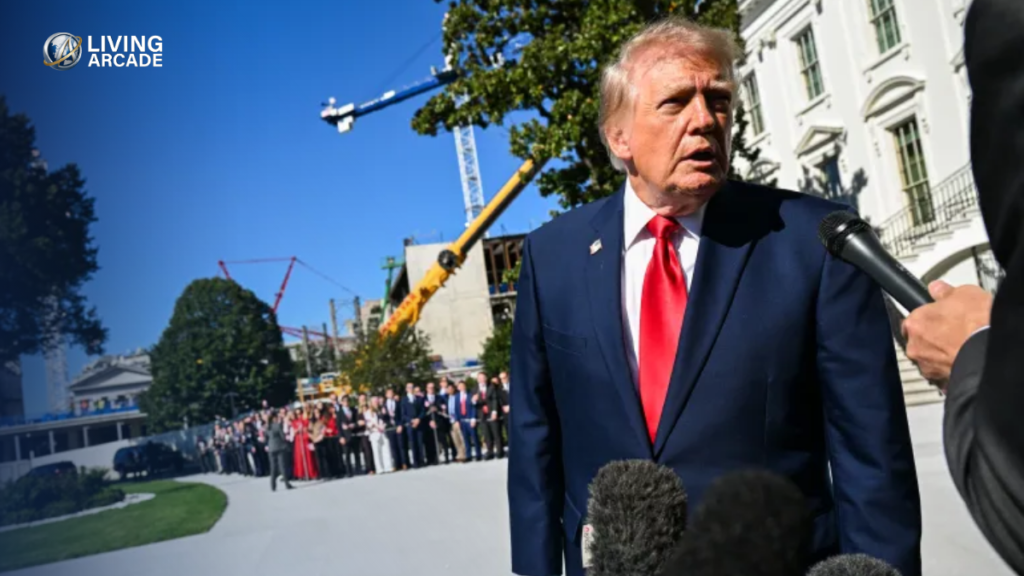
President Trump, addressing reporters Monday from Trump National Doral in Miami, did not minimize the sacrifice. “Three is three too many as far as I’m concerned,” the president said of early casualties, adding that Pentagon projections suggest the toll could rise further as combat operations continue. It is the rare and difficult candor of a commander who refuses to paper over the reality of war.
Strait of Hormuz: The World Watches
The operation has opened a new front of tension with direct global economic consequences. Iran’s Islamic Revolutionary Guard Corps threatened to close the Strait of Hormuz, the narrow waterway through which roughly one-fifth of the world’s oil supply passes each day. The threat sent commodity markets into a brief spiral and prompted one of the most direct warnings of the conflict so far.
President Trump responded without ambiguity, warning on his Truth Social platform that if Iran blocked tanker traffic through the Strait of Hormuz, the United States would strike Iran “20 times harder.” NBC News The White House amplified the message.
“If they do anything to stop the flow of oil or goods within the Strait of Hormuz, they will be hit by the world’s most powerful military 20 times harder than they have been hit thus far,” White House Press Secretary Leavitt confirmed to reporters. The Hill
At the direction of President Trump, U.S. Central Command has already been eliminating inactive mine-laying vessels positioned in the Strait, wiping them out with precision to ensure freedom of navigation is preserved. CNN The message from Washington to Tehran is clear: the United States will not allow a weakened and cornered regime to hold the global economy hostage.
The Strategic Objective: Generational Security
The three pillars of Operation Epic Fury, as outlined by General Caine, are the destruction of Iran’s missile and drone capabilities, the elimination of its naval power, and the permanent degradation of its military and industrial base to ensure Iran cannot threaten the United States or its partners for years to come.
Senate Majority Leader John Thune of South Dakota said the operation could be “generational in terms of its impact,” not only for the Middle East but for the entire world, given Iran’s long record as the largest state sponsor of terrorism and its nuclear ambitions. Congress.gov
Senator Lindsey Graham described the moment bluntly: “The mothership of terrorism is sinking. The captain is dead. The largest state sponsor of terrorism is close to collapsing.” Congress.gov
The “captain” Graham referred to is Ayatollah Ali Khamenei, Iran’s supreme leader for more than three decades, who was killed in strikes during the opening hours of the operation. President Trump confirmed Khamenei’s death in a public address, calling him a “wretched and vile man” who had the blood of hundreds of Americans on his hands. The White House Across Iran that night, the voices of ordinary Iranians could be heard in the streets, cheering and celebrating. The White House
An American Mission, Defended at Home
On Capitol Hill, Republican leadership has closed ranks behind the operation. Speaker Mike Johnson described the mission as limited in scope, expressed confidence that its objectives are being achieved, and said the operation is nearing its completion. Congress.gov
Not everyone in Washington has been uniformly supportive. But for the men and women executing the mission thousands of miles from home, the politics are secondary to the purpose. Senator Tom Cotton put it plainly, saying he had not heard a single constituent express anything but unqualified support for the president’s decision to finally put America’s foot down and end 47 years of terror by the Islamic Republic. Congress.gov
President Trump himself framed the mission in the broadest possible terms when he addressed the nation at its launch. “We are undertaking this massive operation not merely to ensure security for our own time and place,” he said, “but for our children, and their children, just as our ancestors have done for us many years ago. This is the duty and the burden of a free people.”
As Day 11 draws to a close, that burden is being carried by American warriors in the skies over Iran, on the waters of the Persian Gulf, and in the quiet grief of seven families across the United States. The operation is not yet finished. But the direction of history, at least for now, is being written in Washington.
![Picture of Mahibur Fakir [Hillol]](https://secure.gravatar.com/avatar/5d35a11815be0a5f73b6180975d1521fdd7694c880473d8ad5c74749dce26bd6?s=176&d=mm&r=g)